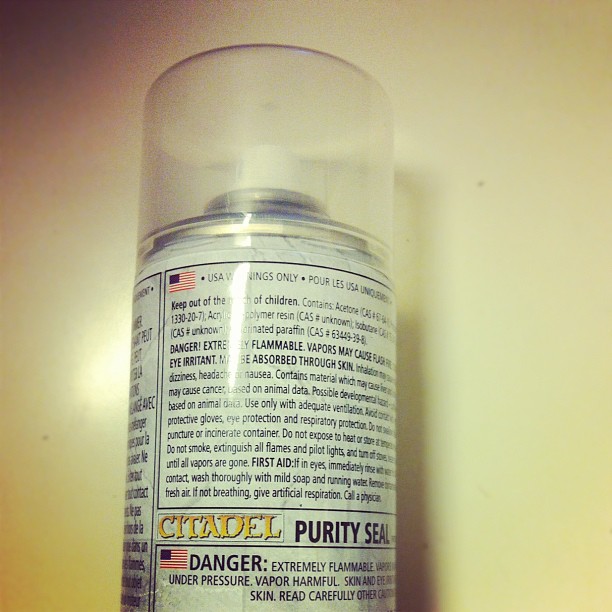
I thought it was time to finally test out Citadel Purity Seal (aka Citadel Colour Matte Varnish) for working on resin ball joint dolls. So I walked into the city and bought myself a can. I wanted to do this review to help others in their sealant quest for the doll hobby. What led me to think great thoughts about getting Purity Seal was it being cheaper and easier to get without bothering with online hunting or expensive shipping. However, I was met with a bit more disadvantages than I was hoping for. (Please keep in mind this is a review of a one time test using artist quality pastels as the blushing method. This is my own opinion of the product.)
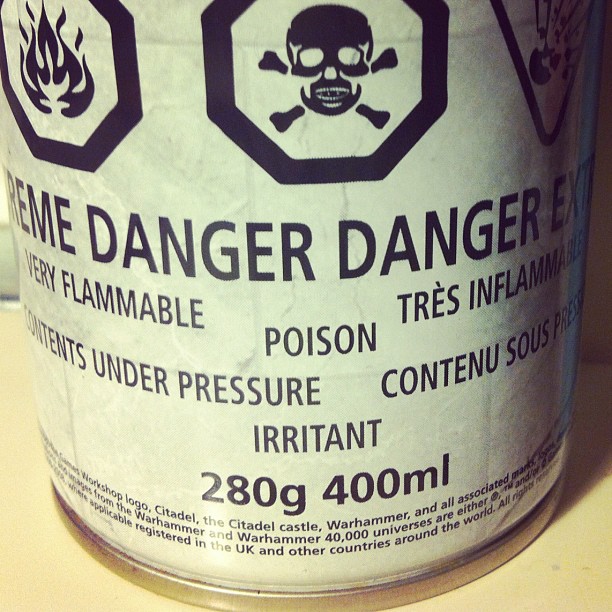
The first thing I loved that I mentioned was it being inexpensive when compared to getting my other favorite sealers. The can of Purity Seal is 400ml, which is roughly 2.2 cans of the MSC($13-$19) and ZMFP($9) cans, and only cost me $17. The Games Workshop where I purchased it from was located in New York City so it also saved on shipping.

Another thing that I liked was the labeling being in English. But taking one look at this can gives you immediate anxiety! With Mr. Super Clear or ZM Finishing Powder, the labeling is in Japanese and tiny. Seeing all these warnings really makes you rethink about what you're dealing with when doing faceups. Rather know than not know though. Always make sure you are taking extra precautions when using sealer!
When I began my first coat I was surprised by the power this can sprayed out it's product. It coated all over pretty fast and pretty hard. I'm not sure, but it seemed like you would have to tape down smaller parts you wanted to coat to prevent them from being blown away. So this was a pro and a con in certain situations.
Now, that's pretty much it with the things that I liked about it. It was pretty true to it's matte description and did have a lot of tooth, but perhaps it was not optimal for using pastels.
One thing I did not like, which is obvious, were the fumes of the sealer being rather strong, stronger than MSC and ZMFP, and it lingered for a lot longer. This does not mean is more or less dangerous than the other sealers! Always use all sealers in a well ventilated area with a respirator and gloves. Also, one of the ingredients to the sealer is Acetone. I believe this is used to allow the product to be liquefied and sprayed. It is possible that it is also in MSC and ZMFP, but I am not certain. Acetone is damaging to resin. It may be too little to affect the resin, but I have not been able to do a long term test as of yet.
I used the head cap of my own doll to test this sealer. It had a shiny company seal so you could really see how the sealer went on. As you can tell below the before the seal is glossy and clear, and after spraying it is a lot less glossy and has a gritty coating. The texture of the cap after spraying was somewhat velvety and had a powdery residue (this is why you should handle with gloves when working). This was after waiting 30 minutes between each coat. The directions say it is dry after 10-15 mins and ready to paint over after an hour. I cannot compare this information with the other sealers, as their directions are not in English.

After waiting the 30 minutes on the last coat I blushed with Rembrandt pastels. The sealer was rather stubborn. It seemed to not want to accept the pigment. I added the normal amount to my brush for blushing red cheeks and added it to the head cap to be met with a lot of blotchy unevenness. That was a big dislike for me. On top of the long wait time for the fumes to disperse, and for the sealer to be ready to work, I'd be faced with slowly layering pastels.

Compared to working with the other sealers I had a way easier time with MSC and ZMFP. I personally would not continue to use Purity Seal, but that does not mean it's not an option when sealing Ball Joint Dolls. If you liked this review or have any other questions about Citadel Purity Seal leave a comment. You can also write to Games Workshop for questions about their products. Thanks for reading!


